

Eating for Endometriosis: How Nutrition Can Support Symptoms and Gut Health
October 1, 2026
Women's Health
Eating for Endometriosis: How Nutrition Can Support Symptoms and Gut Health
Endometriosis is a common disease affecting women’s physical, social and wellbeing. Although so common, women can spend years searching for answers before receiving a diagnosis.
Symptoms can vary but can include infertility, painful cramps, pain when passing urine or opening bowels, bloating, constipation, diarrhoea, pelvic, leg and back pain and heavy menstrual bleeding.
Due to the extensive list of digestive symptoms, it is not uncommon for women to be diagnosed with IBS or other gut conditions before finding the underlying cause is endometriosis. We often find that by the time women are coming to chat with us, they are quite tired of explaining the symptoms they have been experiencing and are equally exhausted with how much these symptoms impact their daily life.
More than 75 per cent of women with endometriosis experience gastrointestinal symptoms, which closely mimic those experienced by people with IBS. Given this overlap, it comes as no surprise that the low FODMAP diet, originally designed for IBS, keeps coming up as something worth considering.
So what actually is endometriosis?
Endometriosis occurs when the lining of the uterus grows in other parts of the body such as the bowel, bladder or pelvic cavity.
This unwanted tissue growing outside the uterus causes inflammation resulting in those unwanted symptoms. For example the growth can be obstructive which leads to uncomfortable bloating and constipation.
Why is this happening to me?
Endometriosis is strongly driven by estrogen, an essential hormone for reproductive health, bone strength, brain function and cardiovascular health.
Unfortunately for women living with endometriosis, there are higher levels of estrogen, which stimulates the growth of endometrial tissue, resulting in higher levels of inflammation.
Higher levels of inflammation can = a drive in growth of endometrial tissue and exacerbate symptoms.
What might we try to target with nutrition support?
In simple terms, inflammation.
For some women experiencing endometriosis, nutrition can play a role in easing symptoms, recurrence and progression of the disease.
Although there are no “endometriosis diets”, current evidence suggests nutrition can influence inflammation, gut health and how estrogen is processed in the body.
It is important to preface the importance of starting with looking at what foods could be added in, rather than following strict rules or cutting out important food groups. This is where we come in.
The link between your gut and endometriosis
Our gut contains trillions of bacteria that play a role in digestion, immune health and controlling inflammation.
Endometriosis can cause a shift in the type of bacteria in our gut which is called dysbiosis (an imbalance of bacteria). This dysbiosis can lead to inflammation causing onset and progression of endometriosis.
…so where could I start when it comes to nutrition?
Whilst our recommendations will be unique to everyone, some additions or changes you could look at may include:
1. Fibre: We think this is one of the most overlooked nutrients when it comes to women’s health.
It is the indigestible part of plant food that ferments and forms the bulk of stool to help it pass through the digestive tract.
There are two main ways fibre may help for women with endometriosis.
Firstly, as we mentioned before, endometriosis progression and onset is driven by high levels of estrogen hormone. You can think of fibre as a mop, it goes through the digestive system mostly undigested and picks up all unwanted toxins, including excess estrogen and then excretes it.
This stops the estrogen going into our blood and causing further endometrial growth and inflammation which in turn can improve symptoms.
Secondly, your gut loves fibre as it ferments and produces compounds that:
- Support gut lining to stop toxins coming into the gut
- Reduces inflammation which causes progression of endometriosis
- Improve dysbiosis
2. Anti-inflammatory foods
As we mentioned, inflammation can exacerbate and progress symptoms of endometriosis. Some foods that we can add can naturally support the body to decrease inflammation. The hero in these anti-inflammatory foods can be:
- Vitamin C and E
- Polyphenols
- Omega-3 fats
Eating all these foods sounds like a lot of work so we hope by providing some examples, it makes it easier for you!
- Include a side salad with lunch or dinner
- Add an extra vegetable into your dinner, onto your sandwich or into your salad (fresh or frozen)
- Add apple or berries into your porridge, yoghurt or cereal
- Blend fruit and vegetables into smoothies
- Add frozen vegetables to stir-fries, fried rice and pasta dishes
Include wholegrains such as grainy bread, lentils, beans, nuts and seeds. Try:
- Adding chickpeas, nuts or seeds into your salad
- Adding some canned lentils into your spaghetti
- Adding beans to your Mexican dishes
- Choose multigrain bread or wraps over other varieties
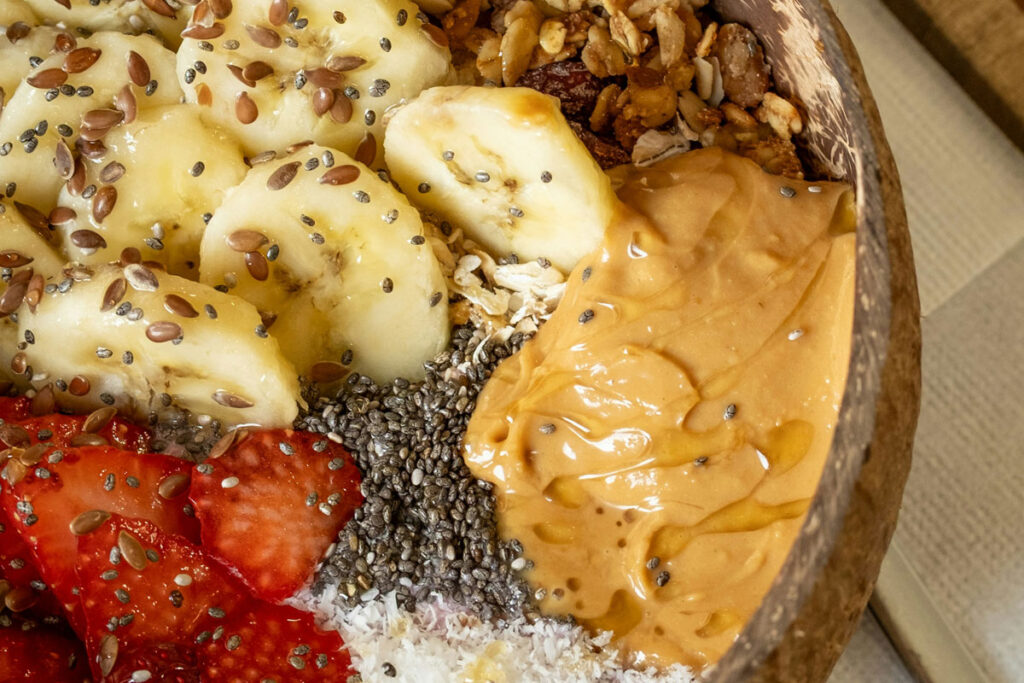
- Adding granola or muesli over your fruit or yoghurt
- Swapping protein sources to fish in some meals throughout the week e.g. tuna sandwich, sardines in salad, fish curries
- Add seeds to salads
- Add chia seeds to your cereal, porridge, yoghurt and smoothies
Our goal is to make navigating endo with food feel easier and less confusing, so you can feel confident that you’re nourishing yourself and supporting your overall health.
Written by Lily Scanlan (Dietetic Student)
How can Flora Health Services help me with this?
Ready to chat with one of our Dietitians? You can book here. We offer appointments at our Newcastle clinic or online across Australia.
Still unsure whether dietetic support is right for you? We get it.
That’s why we offer a free 15-minute discovery call. We would love to meet you and see if we are the right fit.
References
1. Endometriosis Australia. Understanding Endometriosis [Internet]. Endometriosis Australia. 2024 [cited 2026, August 28]. Available from: https://endometriosisaustralia.org/understanding-endometriosis/
2. Martire FG, Costantini E, d’Abate C, Capria G, Piccione E, Andreoli A. Endometriosis and Nutrition: Therapeutic Perspectives. Journal of Clinical Medicine [Internet]. 2025 June 5 [cited 2026 August 28];14(11):3987. Available from: https://www.mdpi.com/2077-0383/14/11/3987
3. Czerniak J, Ciebiera M, Zeber-Lubecka N, Olcha P. Dietary Fiber in Endometriosis: Mechanisms, Evidence, and Potential Clinical Benefits—Up-to-Date Review. Nutrients. 2026 Feb 21;18(4):690.
4. Zhu J, Zhou Y, Jin B, Shu J. Role of estrogen in the regulation of central and peripheral energy homeostasis: from a menopausal perspective. Therapeutic Advances in Endocrinology and Metabolism. 2023 Jan 1;14.
5. Efthalia Moustakli, Nektaria Zagorianakou, Stylianos Makrydimas, Oikonomou E D, Miltiadous A, Makrydimas G. The Gut–Endometriosis Axis: Genetic Mechanisms and Public Health Implications. Genes [Internet]. 2025 July 30 [cited 2026 August 28];16(8):918–8. Available from: https://www.mdpi.com/2073-4425/16/8/918
6. Fibre | Nutrition Australia [Internet]. Nutrition Australia. 2021 [cited 2026 August 28]. Available from: https://nutritionaustralia.org/resources/fibre-2/
7. Office of Dietary Supplements – Omega-3 Fatty Acids [Internet]. Nih.gov. 2017 [cited 2026 August 28]. Available from: https://ods.od.nih.gov/factsheets/Omega3FattyAcids-HealthProfessional/#h3
About Us
Flora Health, co-founded by Accredited Practising Dietitians Laura Otton and Pip Whitehouse, is a Newcastle-based clinic providing evidence-based nutrition care for women, children, families, and those recovering from eating disorders.
Book a Free Discovery Call
Ready to get started? Book a free call with our team to talk through your current nutrition concerns, explore which consultation is right for you, and see how Flora Health can support your journey.