

Low FODMAP Diet for Endometriosis: Can It Help Reduce Bloating, Pain and Gut Symptoms?
September 23, 2026
Women's Health
Can a low FODMAP diet reduce Endometriosis symptoms such as bloating, pain and gut issues?
What Is Endometriosis?
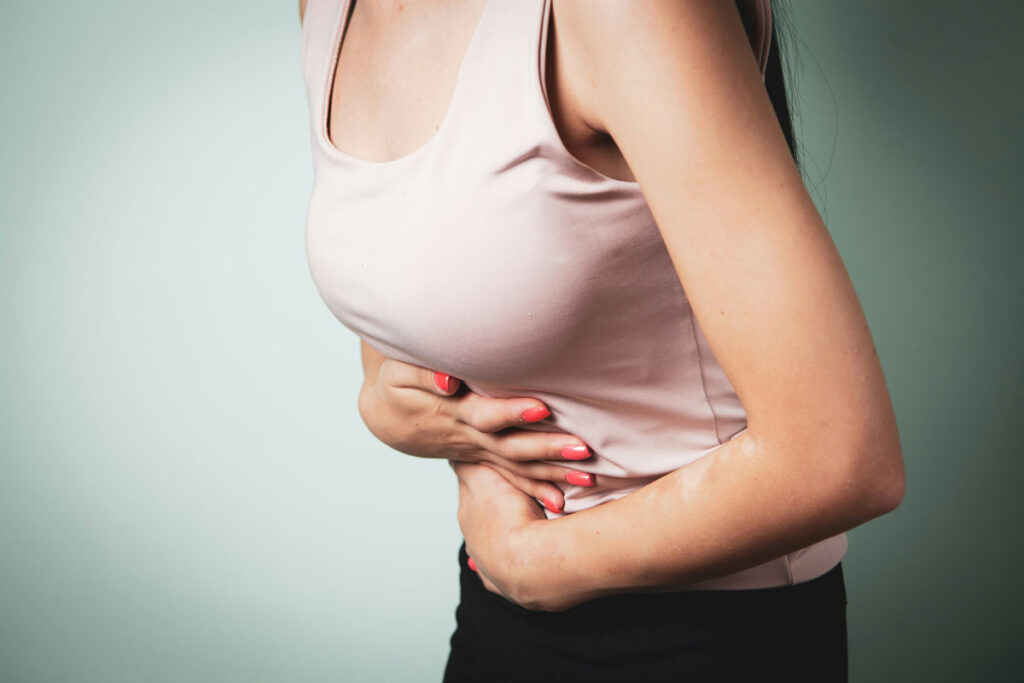
Endometriosis is a common disease where tissue similar to the uterus grows in other parts of the body, including the gastrointestinal tract, bladder and pelvic cavity. The symptom list is long: infertility, pelvic pain, pain when passing urine, as well as a range of gastrointestinal symptoms including abdominal pain, constipation, bloating, diarrhoea and pain when opening bowels.
More than 75 per cent of women with endometriosis experience gastrointestinal symptoms, which closely mimic those experienced by people with IBS. Given this overlap, it comes as no surprise that the low FODMAP diet, originally designed for IBS, keeps coming up as something worth considering.
So, What Are FODMAPs?
FODMAP stands for Fermentable Oligosaccharides, Disaccharides, Monosaccharides, and Polyols – the names of five naturally occurring sugars that aren’t well absorbed in the gastrointestinal tract.
When these carbohydrates are eaten, they move slowly through the small intestine, attracting water. From there, they travel down to the large intestine, where gut bacteria ferment them, producing gas. In someone with a sensitive gut, that combination of gas and water can trigger bloating, abdominal pain, and altered bowel habits.
In a culture that equates health with thinness and control, these changes can feel uncomfortable and sometimes ‘wrong’. When the body becomes less predictable, food is often the first thing people try to control.
Throughout the different life stages for a woman, food guilt likely shows up because:
- Puberty brings rapid body changes before many people have the skills to cope with them
- Pregnancy requires increased intake in a culture that praises restriction
- Postpartum recovery happens alongside pressure to “bounce back”
- Perimenopause and menopause can change weight, hunger and metabolism which diet culture frames as problems to fix rather than changes to be supported
Food rules and guilt can temporarily create a sense of control however they often lead to a sense of being out of control in the long run.
Not because you lack discipline and not because you lack motivation.
It’s a predictable response to being taught your body should stay the same, even when biology says otherwise.
The Low FODMAP Diet: How It Works
The low FODMAP diet is an evidence-based dietary intervention, first introduced by Monash University, to help manage medically diagnosed IBS.
It’s typically made up of three phases:
- Low FODMAP diet: for 2-6 weeks high FODMOP foods are swapped for low FODMAP foods alternatives.
- FODMAP reintroduction: over 8–12 weeks, each FODMAP group is reintroduced one at a time, one food at a time, across three days, to identify personal triggers.
- FODMAP personalisation: using what’s been learned, a long-term, sustainable diet is built around what you can and can’t tolerate.
Why would this have anything to do with endometriosis?
Endometriosis is a disease of tissue outside the uterus, not a bowel disease, so at first glance, a gut-focused diet seems like an odd fit.
But the connection isn’t about endometriosis tissue itself; it’s about a shared mechanism called visceral hypersensitivity. This is a state where the nerves in and around the gut become more sensitive to normal stretching and gas, so that ordinary digestive processes register as pain. It’s the same mechanism thought to underlie IBS, and there’s growing evidence it’s also common in people with endometriosis.
Given the overlapping GI symptoms between IBS and endometriosis, new research points to a real benefit of FODMAP restriction for the gastrointestinal symptoms that come with endometriosis, making dietary modification a practical, non-invasive option worth exploring.
How can the low FODMAP diet help?
The low FODMAP diet works by reducing the amount of fermentable carbohydrates consumed, which in turn reduces the amount of water being drawn into the large intestine and the gas produced by fermentation. Less water and less gas means less of the painful bloating and altered bowel habits that so many women with endometriosis experience.
How can Flora Health Services help me with this?
If you’re considering the low FODMAP diet, working with a dietitian isn’t just a nice-to-have: it makes a real difference to how safely and successfully you can do this.
It is easy to get it wrong: FODMAPs are hidden in a huge range of foods, and portion size matters – a small serve of a high FODMAP food might be fine, while a larger serve of the same food triggers symptoms. Without guidance, it’s easy to over-restrict unnecessarily or miss triggers entirely.
The elimination phase isn’t meant to last. A dietitian keeps you on track with timing, moving you into reintroduction at the right point, rather than staying in restriction longer than needed, which can affect gut microbiome diversity and nutritional adequacy over time.
Reintroduction is where the real answers are. This phase is methodical by design, one FODMAP group, one food, tested over a few days – so you can pinpoint exactly which specific carbohydrates you react to, rather than avoiding whole food groups “just in case.”
You’ll end up with a diet you can actually live with. A dietitian helps translate what you learn into a long-term way of eating that’s varied, nutritionally adequate, and realistic, not a shrinking list of “safe” foods. It may also be that you only need to follow a low FODMAP intake cyclically, which the support of a Dietitian can help determine.
They can rule out overlaps. Because endometriosis, IBS, and other gut conditions share so many symptoms, a dietitian (often alongside your gynaecologist or GP) can help make sure other causes aren’t being missed while you focus on diet.
If you’re considering it, the best next step is talking to a dietitian about doing the elimination-and-reintroduction process properly, so you land on a sustainable, personalised diet rather than an indefinite list of “foods I’m scared of.”
Our goal is to make navigating FODMAPs with food feel easier and less confusing, so you can feel confident that you’re nourishing yourself and supporting your overall health.
Written by Georgina Leslie (Dietetic Student)
Ready to chat with one of our Dietitian’s? You can book here. We offer appointments at our Newcastle clinic or online across Australia.
Still unsure whether dietetic support is right for you? We get it.
That’s why we offer a free 15-minute discovery call. We would love to meet you and see if we are the right fit.
References
- Dr Jane Varney – Senior Research Dietitian. (2025, May 13). New research publication – endometriosis and the low FODMAP Diet. Monash Fodmap. Monashfodmap.Com. http://www.monashfodmap.com/blog/new-research-publication-endometriosis-and-the-low-fodmap-diet/
- Endometriosis and FODMAPS. (2021, March 27). Endometriosis Australia. https://endometriosisaustralia.org/endometriosis-and-fodmaps/
- Everyday nutrition. (2026). Everydaynutrition.Com.Au. https://www.everydaynutrition.com.au
- Keukens, A., Veth, V. B., van de Kar, M. M. A., Bongers, M. Y., Coppus, S. F. P. J., & Maas, J. W. M. (2025). Effects of a low-FODMAP diet on patients with endometriosis, a prospective cohort study. BMC Women’s Health, 25(1), 174. https://doi.org/10.1186/s12905-025-03715-1
- Low FODMAP Diet for endometriosis – the dietologist. (2018, September 16). The Dietologist. https://thedietologist.com.au/low-fodmap-diet-for-endometriosis/
About Us
Flora Health, co-founded by Accredited Practising Dietitians Laura Otton and Pip Whitehouse, is a Newcastle-based clinic providing evidence-based nutrition care for women, children, families, and those recovering from eating disorders.
Book a Free Discovery Call
Ready to get started? Book a free call with our team to talk through your current nutrition concerns, explore which consultation is right for you, and see how Flora Health can support your journey.